Masonry Restoration in Brookhaven, PA
We bring failing brick and stone back to sound condition without replacing it: repointing joints, rebuilding sections that have moved, and replacing only the units that have truly failed.
- Brookhaven, PABased in Delaware County
- Led by MikeOn every job, with his crew
- Mon to Fri9 am to 5 pm
What does masonry restoration involve on an older Delaware County home?
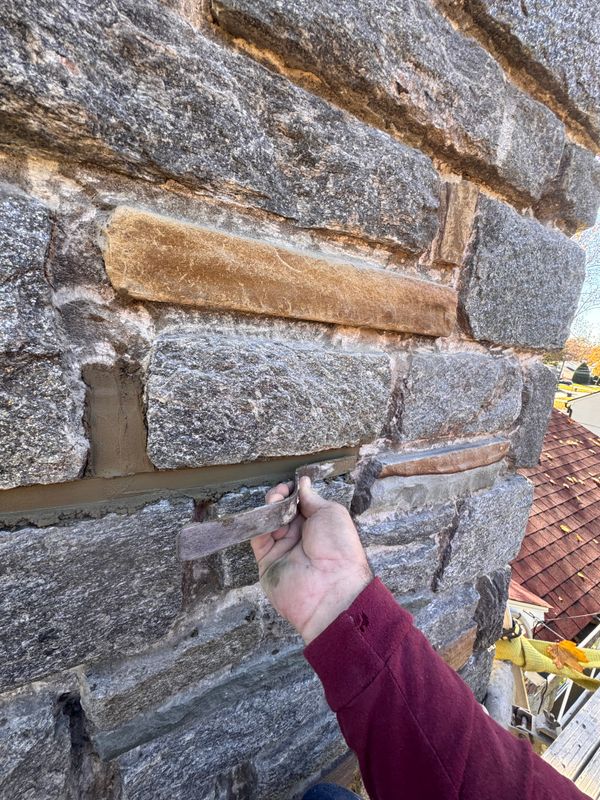
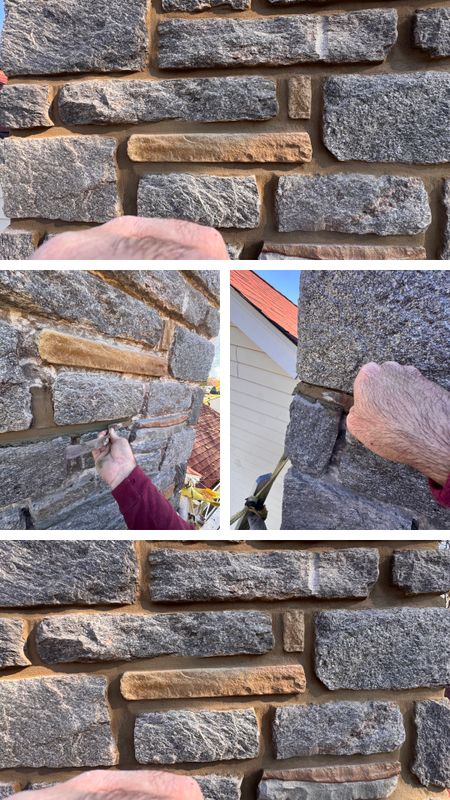
Masonry restoration brings failing brick and stone back to sound condition without tearing it out. K&S Masonry Restoration repoints open joints, rebuilds sections that have moved, and replaces individual units that have spalled, then matches the repair so it reads as part of the original wall. The skill is judgment: knowing how little to disturb while still fixing the real problem.
Older masonry in Delco was laid with softer, lime-based mortar meant to flex and let moisture escape. Repair it with a hard modern Portland mix and the mortar ends up stronger than the brick, so the next freeze and thaw cracks the brick face instead of the joint. That one mistake can ruin old brick that weather alone would have left standing.
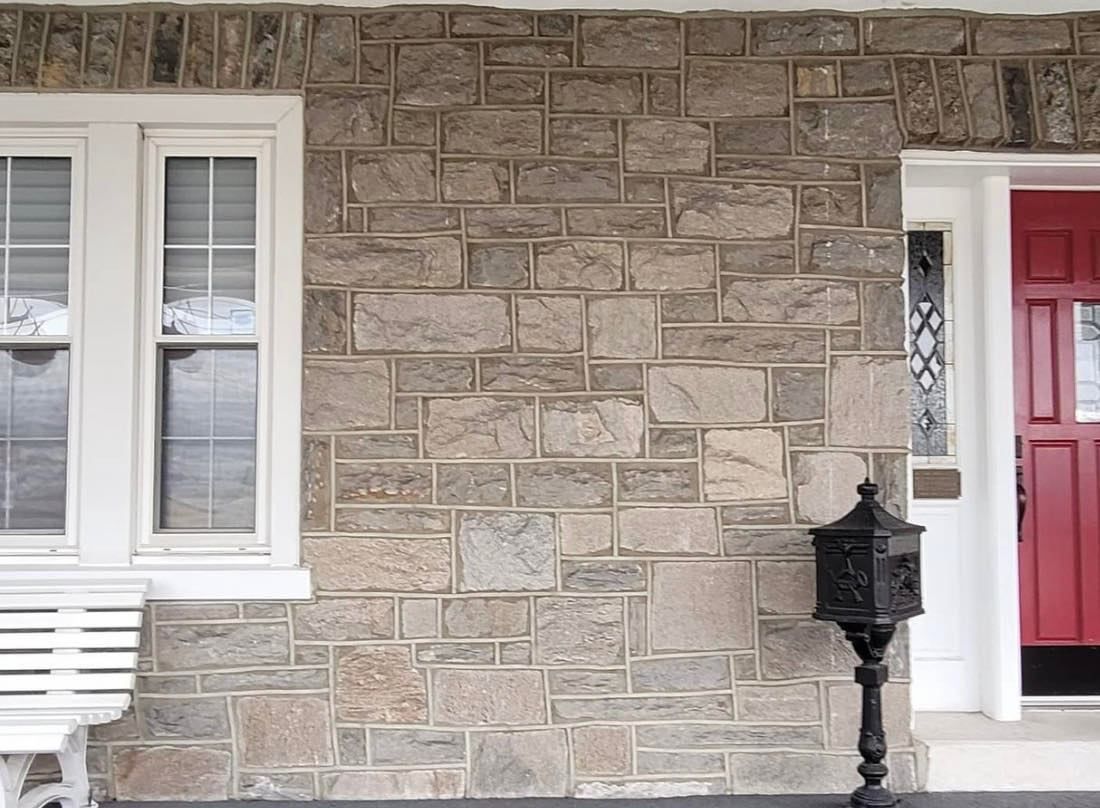
We work on stone foundations, fieldstone and ashlar facades, brick walls, porch pillars and chimneys across Brookhaven and the Philadelphia suburbs.
Signs a wall can still be restored
Catching a problem early usually keeps the original masonry in place. These are the signs the window is still open:
- Mortar you can scrape out with a screwdriver, but the brick is still sound
- Hairline stepping cracks rather than open, displaced joints
- Staining or white efflorescence, but no bulging or leaning yet
Repointing, layer by layer
A masonry wall is three layers doing three jobs. Repointing renews only the first one, and it only works if the other two are sound.
The joint
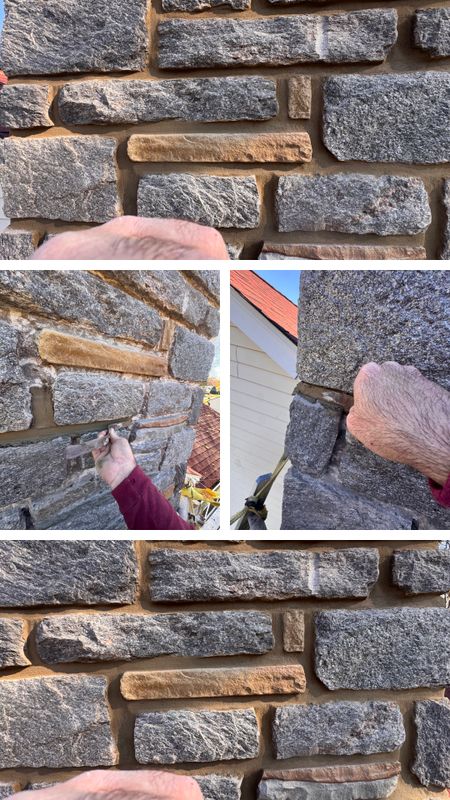
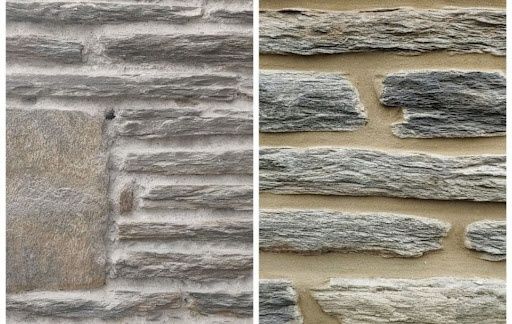
The mortar between the units. It is the soft, sacrificial layer, built to take movement and let moisture out. When it crumbles or recedes, we rake out the loose material to sound depth and repack it with mortar matched to the original in strength, color and joint profile.
The stone or brick face
The units you see. Sound faces stay in place. A mortar harder than the stone or brick pushes stress into it, which is how faces start to spall, so the new mix is deliberately softer than the masonry around it.
The structure
The wall behind it, the backing and the foundation. If it is bulging, leaning or stepping apart on a diagonal, water has been working inside, and that section needs rebuilding rather than repointing. We check this before we quote.
How a restoration runs
Assess, match, then do the least invasive repair that actually solves the problem.
Find the water
Almost every restoration starts with moisture. Before touching a joint we work out where water is getting in, such as a failed cap, missing flashing or a grade problem, because repairing masonry without stopping the water just resets the clock.
Match the mortar
New mortar is matched to the original in strength, color and joint profile. On soft historic brick or stone that means a softer mix, deliberately weaker than the masonry, so the joint keeps taking the movement.
Repair, not replace
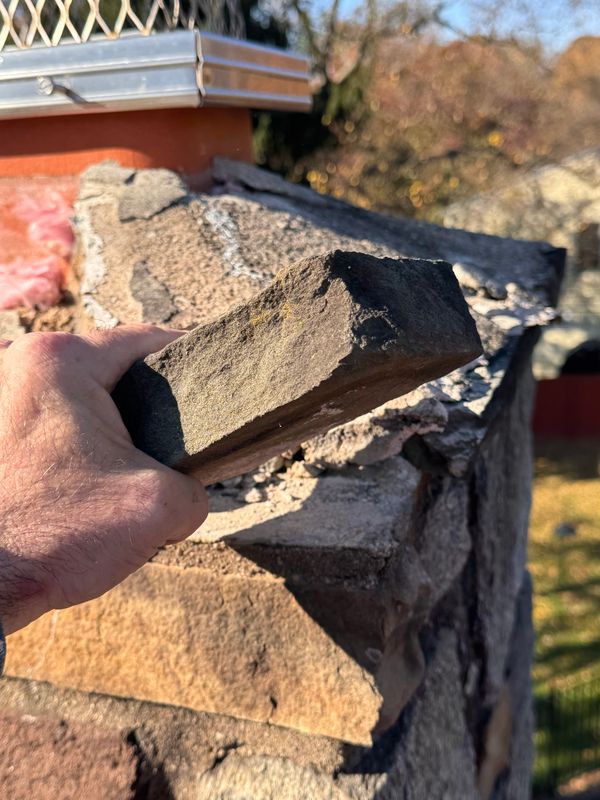
Sound brick and stone stay. We cut out only what has genuinely failed, rebuild what has moved, and leave the rest of the wall carrying the age it has earned.
Masonry restoration across Delaware County and the Philadelphia suburbs
K&S Masonry Restoration is based in Brookhaven and works the stone and brick homes of Delco and the surrounding counties.
- Brookhaven, PA
- Havertown, PA
- Drexel Hill, PA
- Springfield, PA
- Wayne, PA
- Philadelphia, PA
- Chester, PA
- Radnor, PA
- Ardmore, PA
Also serving Delaware County, Montgomery County and Chester County.
- Local. Brookhaven based, working Delaware County and nearby.
- Hands on. Mike leads the jobs with his crew.
- Easy to reach. Monday to Friday, 9 am to 5 pm.
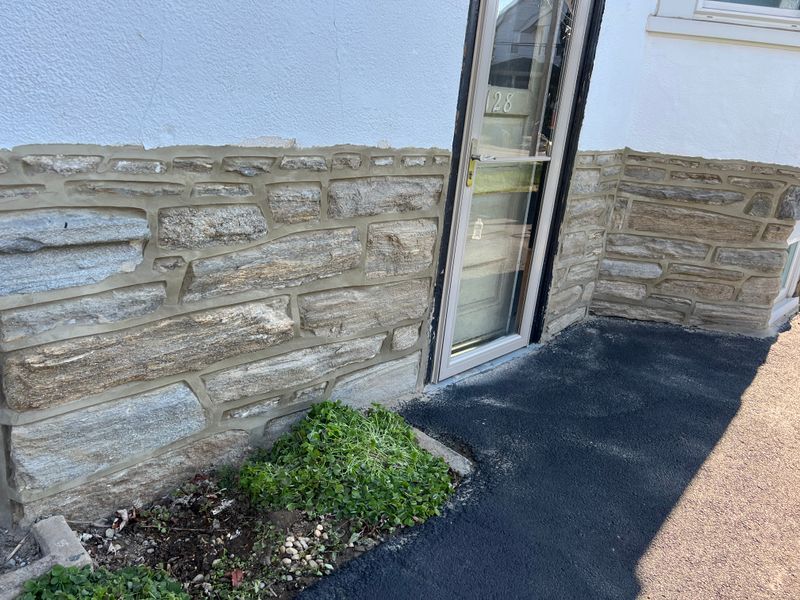
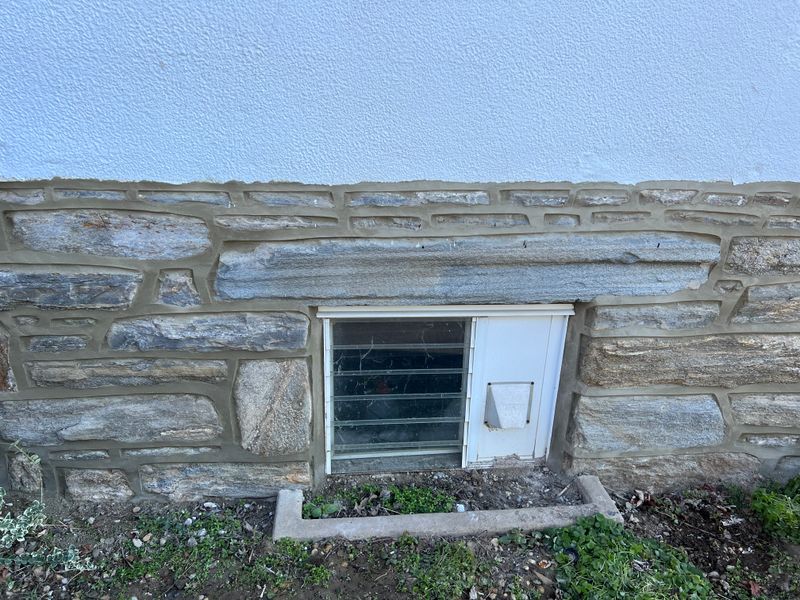
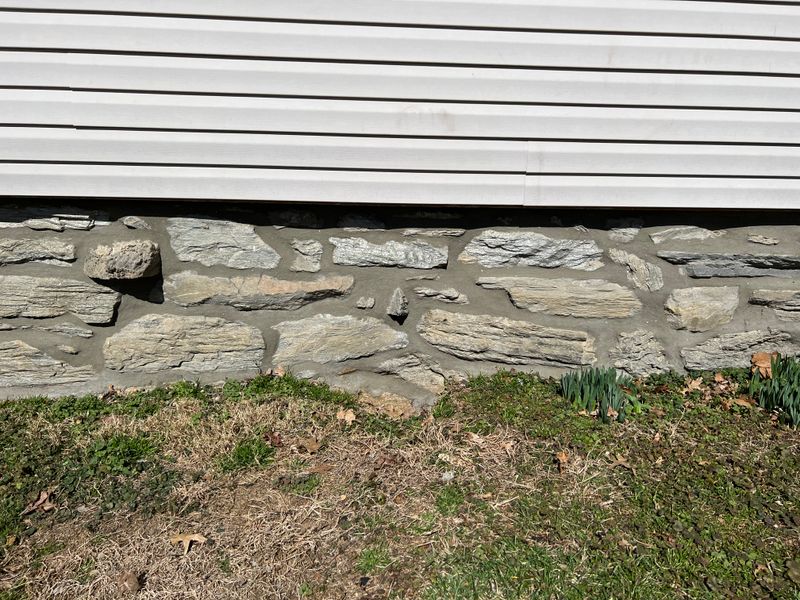
“Michael and his crew repointed our stone foundation. Our 80+ year old house had never been repointed, and the mortar was crumbling.
Michael and team did an amazing job, and we’re incredibly happy with the results. Watching the crew made me appreciate how much skill it requires, and how it borders on an art form.
Price was reasonable, and the crew was tidy and professional. I highly recommend Michael and the crew at K&S Masonry.”
Questions homeowners ask us
What is the difference between masonry restoration and masonry repair?
Repair fixes a defect, while restoration returns the wall to sound condition and keeps as much original material as possible. A repair might fill a crack and move on. A restoration asks why the crack formed, stops the cause, cuts out only what has failed, and rebuilds it with matched mortar and units. On an older Brookhaven home, that is the difference between a patched wall and one that looks untouched.
Will the repointed sections match the rest of my wall?
That is the standard we work to, and it comes down to three things: mortar color, mortar strength and joint profile. The profile, whether concave, struck or flush, is what makes a repair obvious from the sidewalk when it is wrong. Fresh mortar also cures lighter than it settles, so a new section usually blends in further over the first several months.
How do I know if my wall needs restoration or a rebuild?
The test is whether the masonry has moved. If the mortar is crumbling but the brick or stone is sound and the wall is still plumb, repointing and selective unit replacement are usually enough. If it is bulging, leaning, stepping apart on a diagonal, or the faces are spalling in sheets, that section likely needs rebuilding. We assess this before quoting.
What affects the cost of masonry restoration?
Cost depends on how much of the wall is affected, how deep the joints have failed, how high or hard to reach the work is, and whether units need replacing or sections need rebuilding. Only a look at the wall gives a real number, so we assess it before quoting instead of guessing a range. Tell us what you are seeing and we will go from there.
Can restoration be done on a historic home?
Yes, and it matters most there because the material cannot be replaced. The key is a lime-based or otherwise softer mortar suited to the original construction, not a hard modern Portland mix, which traps moisture and pushes stress into the face. If your home is in a historic district, confirm any approval rules on materials and joint finish before work begins.
Tell us what you are seeing in your wall
Crumbling joints, stepping cracks or staining: send us the details and we will look at the wall before we quote.